Sunday, April 10, 2016

Sunday Revue April 10th: O.S.F. Galatea

Ladies and Gentlemen, Please Put Your Hands Together! There’s Someone New Onstage!

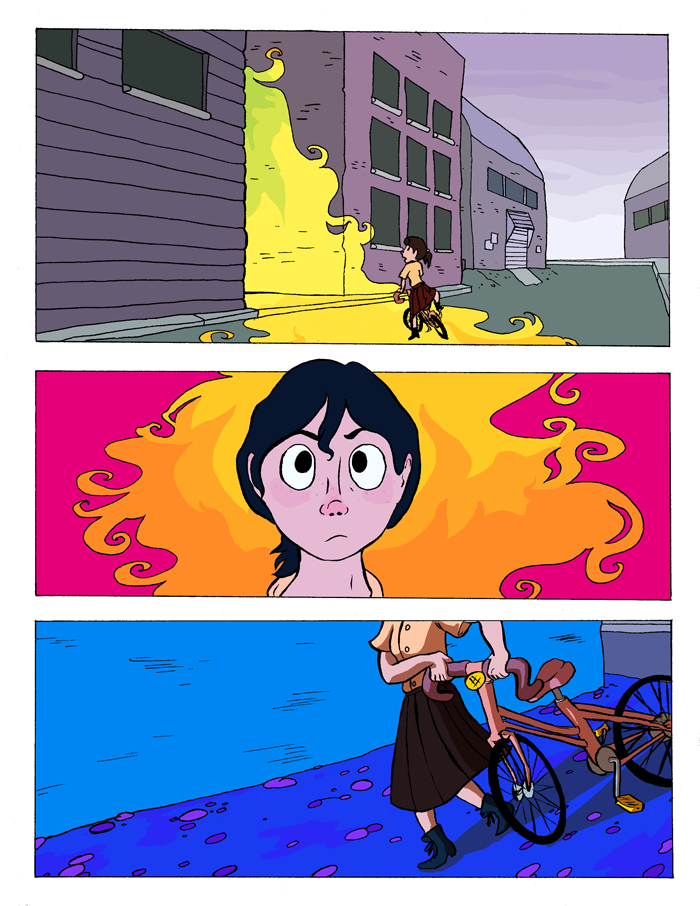
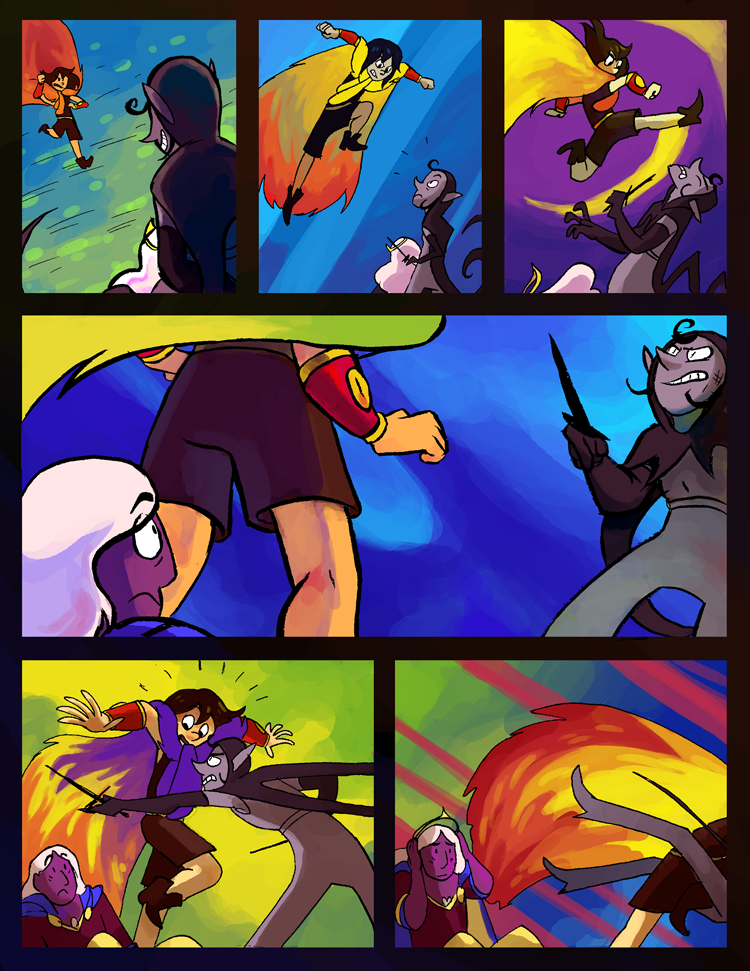
Hello! My name is Glenn Song. I’m the author and illustrator of the comic This Mortal Coil, which Olivia has reviewed here. This Mortal Coil is about a Gothic Lolita deity, Kamiko, and her adventures helping mortals who become entangled with spirits, demons, and gods from the Eternal Realm. The first story “The Rabbit and the Moon” ends in May and I go on hiatus for a while.

Olivia asked for contributors to the Revue a few months ago, and today I’m answering that call (okay, well, I answered it last week). My reviews will show up Sundays. I look forward to sharing what I know about making comics after self-publishing mine online for the last 3 years, and maybe I’ll learn a thing or two as well -- I am an amateur after all.

At least I’ll get to read all of your lovely comics.

And Now, Without Further Ado, We Bring You...


Otaku.

The moe frontier.

These are the voyages of...


Otaku Space Force Galatea is a comic by David Swanson and Willis Stone. Otaku are “normal people -- as normal as people can get. They live normal lives and have normal interests.” In this story, a fanboy is an otaku gone bad, pulled to the darker side of fandom. They literally become gremlins that attack other humans (or otaku). Each issue of this comic chronicles the exploits of the O.S.F. Galatea and their mission to boldly go where no otaku has gone before and fight fanboys and girls everywhere, presumably so that we may be free to pronounce “Evangelion” and “Gundam” anyway we please.

The Rating

A sci-fi anime romp!


The Raves


As I read through the first issue of O.S.F. Galatea, the thing that struck me about this comic, was that it felt like a very lighthearted tabletop game being presented as a story. My friends and I are casual D&D players and these characters feel like archetypes and personalities that we would come up with for our gaming session. They’re good enough to get the game rolling and to have a few good laughs for a few hours (while harassing the DM and ruining all of his best laid plans). I really got a sense of that when each character turned down their own corridor of the ship and each one had a different encounter. In that sense, Galatea is fun to read.

The writing is chalk full of references to nerd culture -- Simpsons and DBZ come to mind, but there’s much more. The strips “Galatea Gaiden” rely more on Internet memes, video games, and anime tropes for their gags.

The art style evolves over the four and a half issues presented. It starts out like a manga -- grayscale and screentones -- but later becomes full color. I liked a lot of the graphic design in the comic for the O.S.F. and the Galatea symbol. Oh, and this mock-up of Akane's giant fan was really cool too:

Example of some of the great graphic/prop design in O.S.F. Galatea


A lot of the pages contain animation from simple flairs like the gleam on metal or gunfire across a wall to complex animation like Joan the AI making chibi faces as she zips around the bridge or speedlines as characters get into a fight. The animation is a nice touch and brings in some of the anime aesthetic that define its characters, big moments, and world building. It also gives the pages a bit of dynamism, and it’s cool to see “Galatea” embrace that. Why not, right? We’re in a digital medium and we shouldn’t be constrained by paper. So, if you're looking to add some animated effects for your comic, definitely check this one out.

O.S.F. Galatea - Otakarian Ship Animated GIF
One of the many animated frames in the comic


Having done some animation for my comic, I know it’s additional time consuming work on top of penciling, inking, and rendering a page, but it does add an extra umph to the presentation.

Storywise, I think that they’re trying to create self contained episodes and throw us tiny morsels for the larger overarching plot, which I think is a good way to go about writing stories in high-concept, expansive worlds like this one. You can finish writing/drawing an episode and lead readers onto the next big thing. We can have intimate stories with a few characters, and also, get to the bigger aspects of the world presented in “Galatea”.

The website is clean and simple, and it’s responsively designed to handle desktop, tablet, and smartphone screens so you can pick up and read this work anywhere (I read it on an iPad). Some of the images are fairly large and load slowly on my tablet. I assume because they are animated GIFs. There are some tools like EZGIF's online optimizer and GIMP, which you can use to optimize color palettes and do other things to compress your GIF image.

The Razzies


Organization

My first problem was with the presentation of the first few pages when you read the comic in chronological order. It was a story comic first, then an unrelated gag comic as the next page. As someone coming in cold and binge reading the comic, the gag strips “Galatea Gaiden” threw me off. If the pages were reordered so that we got the first 10 pages that elaborate on the back story and characters, then we’d have some better context for the gag strips. 

Characters

Another issue I had was with the main characters. 

They felt like a collection of gags and anime stereotypes rather than fleshed out individuals. We get a sense of why these folks have banded together -- fighting Fanboys (i.e. monsters) and doing a Robin Hood-thing, but I never got a sense of who they are individually.

If we go back to the tabletop game analogy, the personalities work if I’m at the table playing the game, but once it stands alone as a story, a lot of the humor that would be funny in the moment is lost. I’m looking to connect with these characters beyond the gags.

I assume the characters are all supposed to be otaku of some kind, as the title suggests. In “Galatea” otaku seems to draw it’s roots from how westerners interpret it: someone who watches anime or plays video games, but otaku means more than that. Someone who’s obsessed with a specific hobby - be it anime, idols, manga, history, sports, trains - is an otaku.

For reference there’s some great anime about otaku: Genshiken and Genshiken Nidaime, which are both slice-of-life shows that depict otaku going from college to the working world and how they relate to one another through their hobbies. Princess Jellyfish is about a group of fujoshi (i.e. "rotten girls" or female otaku) who fight to keep their apartment complex from being torn down. There’s also the j-drama Densha Otoko, or the “Train Man”, which is about an anime otaku who saves a beautiful girl from being groped on the subway and ends up trying to date her with the help of other otaku on 2ch.

Embracing this other aspect of otaku might help give the characters some more depth while thematically fitting with the story. Maybe Nobu is a military otaku, and we can get a sense of how he plans tactics in his head for the carnage he’s about to commit. Maybe he knows every detail about the weapons caches he comes across.

Art

The art definitely improves over time, but the biggest issue seems to be the use of perspective for backgrounds. From one of the latest pages:

Wonky perspective with some correction over it.


It’s 1-point perspective going off to the left, but the grid under the Mechland store appears to be going off to another vanishing point. If it’s meant to be some kind of tiled grid pattern then the lines should be straight. The perspective also seems to be really distorted and stretched, and I noticed that in a lot of panels throughout the comic.

If you're looking for a good book on perspective, there’s Perspective! for Comic Book Artists, which presents the concepts of vanishing points and horizon lines all in the form of a comic. Also, Thomas Romain’s twitter feed (he’s an animator in Tokyo) has some nice tips on dealing with background perspective too.

Example of the wonky perspective. There appears to be 3 independent vanishing points.


This is an earlier page of "Galatea", but the perspective looked really wonky. There appears to be 3 different vanishing points in the image. One for the city blocks, one of Nobu that looks like it could be 2-point perspective, and Yukio with his back to the camera. Maybe what we’d really want here is the 1-point perspective, and Nobu and Yukio would have to be pushed up and overlap with the exploding Fanboy to properly achieve the effect. The horizon line also looks like it’s dividing the large panel into two, but it doesn’t seem like that was the intention.

Another issue I have with the perspective is that it’s mostly just lines making up cubical shapes.

Nice perspective but could use a little more background detail to give the place life.


In this panel, he looks like he’s sitting in a large rectangular box and not a cafeteria. The giant LCD gives it something, but the rest on the right is pretty sparse. There could be a little more detail to ground the place.

Website

Minor quibble with the UX: I’d like to be able to click on the image to advance forward through the story instead of pecking at the ‘next’ button. Sometimes I end up hitting the ‘issue forward’ button instead.

Revue

If you’re an otaku, or like internet memes, video game/nerd culture/anime jokes then O.S.F. Galatea might be up your alley.

Saturday, April 9, 2016

Saturday Revue April 9: Papercuts And Inkstains


Get Ready!

Things Are About To Get Interesting...

Ah anthology works. Turn a page, you're in another world. There could be anything hiding in there. 'Papercuts And Inkstains' is a quirky little anthology work, the creation of a team comprised of  Rob Jones, Nick Gonzo, Mike Smith, Kevin Pospisil, Dan Butcher, Mike Sambrook, Rory Donald, and Jim Lavery. It can be found here at the Madius Press store. or on Tumblr.Within each work, four stand-alone pieces will join one long-running gag strip,  and you never know where you'll end up next.

The Rating

A good ol' fashioned bit of fun

The Raves

The anthology has two strong key notes to hold together its rotating cast of artistic styles; dry British wit and a penchant for twists in the tails of its stories that keep things interesting. Particularly true in the stories 'Together Forever' and 'Slaycation', the twists came as unexpected and wonderful gifts to readers. On the  other end of the spectrum, 'By 'Eck On Earth' surprises you with its surreal down to earth Yorkshire reaction to the Zombie Apocalypse.  But they are most certainly outdone by the story F.P.S., which will really make you think twice about morality, war and the rights of the strong to take from the weak. Sometimes we have to see things from the outside to understand them fully. 
 The backbone of this little anthology, now in its fourth issue, is the running gag of 'Profits of Doom', a wonderful bit of noir humor featuring satanists who aren't very good at it. When they try to summon a demon lord of Hell, things get amusing. It reminds me of Terry Pratchett's wonderful book 'Guards Gaurds' in concept and in the juxtaposition of eldritch circumstances and very mundane characters. You just know one of these blokes is a plumber under his cowl.

These stories make the anthology worth reading.

The Razzes

Unfortunately it is the nature of anthologies that some pieces shine less bright than others, and in the case of 'Papercuts And Inkstains' they haven't quite learned how to balance their stars and their dogs. In fact, the very first volume begins with one of the weakest stories in the collection, which is a definite turn-off. I think the team might want to think about setting the bar for submissions a little higher; stuff like 'No' really isn't going to take this anthology far.
Speaking of organization, a little more work needs to  be done in the organizing of anthologies for PDF. In several cases the title page for the piece was at the end of the story! This leaves a very confused reader sorting out changes from tale to tale based on artistic style. Not good.
It's really a shame to have to give this work such a low rating, because if an issue had been made comprised of the best they had, it would have been a 10. 'Profits of Doom' could stand quite well on its own, as could Slaycation and several other pieces. My advice to the creative team is not to mix your dross and your gold, even if you're only using dross to plump out an issue. It degrades the rest of the work.

The Revue

Quite worth a read, even if you do skip a few pages here and there.

Saturday, April 2, 2016

Saturday Revue April 2: Decrypting Rita

Ever Felt Like You've Got Too Much On Your Mind?

Well, Meet Rita 

She's Got You Beat

The comic 'Decrypting Rita' is well named. You spend most of the story wondering if the character's going crazy...or if you are. In the creator's own words, this off the wall tale begins 'when a robot lady is dragged outside of reality by her ex-boyfriend, she’s got to pull herself back together across four parallel worlds… before a hive-mind can take over the entire planet!'
      

'Decrypting Rita' is the creation of Margaret Trauth, who also goes by the artistic moniker of Egypt Urnash, and can be found here.

The Rating

Let me get my brain untangled....ahem....

The Raves

Like mind games? Brain puzzles? Whodunits? You, my friends, have found GOLD. This comic has some of the most involved, intricate and jesuitical storytelling I've ever seen. Every single page is a puzzle. Clues and hints are spread across the story like breadcrumbs, teasing you ever further into the tale. The story follows a handful of core characters  across four nicely color coded streams of reality, which makes keeping them separate and cogent MUCH easier than it could have been.
But whatever world they're in, the main characters are true to themselves and their ideals, and that is one of the strongest points in this comic's favor.  There's a 'Cloud Atlas'esque feeling to the storytelling that is both psychologically compelling and charming. The story harks back to the idea of indeleble 'moral fiber', as archaic as that is, but in 'Rita' it rings true. In the strangest of circumstances, its characters stay faithful to who they are.
And to keep you interested, throughout the story you'll get explorations of love, mortality, meaningful relationships and loss. Oh, and snark. All the snark, all the time. The humor in the story is one of its strongest points, leavening difficult moments and pepping up action. 
The art is a quite impeccable vector style, almost clinical in its precision, and enlivened  now and again with gifs and popups. The site is also one of the most unique out there, with all sorts of innovative features. But all the bells and whistles aside, 'Rita's coloration is a main theme throughout the story. Watch the colors, readers, if you want to know what's going on. You're going to need the help.

The Razzes

But as with so many things, the unique nature of 'Rita' is both its blessing and its curse. You spend an awful lot of time asking what's going on, both with the story and the site itself. The site particularly began to annoy around chapter 5. If you click on a chapter, most of the other navigation buttons disappear until you've read THE ENTIRE CHAPTER, and I found myself with an uncomfortable urge to hit the ESC key. Cutting your readers off from easy navigation until they finish an entire chapter in a sitting? Bad move. The site looks slick, but when it begins to intrude on the story it only showcases the failings of technology. I think I really would have liked to read 'Rita' as a book, and may buy myself a copy yet.
The same problem, alas, popped up in the story, and would also benefit from the blurb on the dust jacket to orient readers. This is a story that really NEEDS you to read the 'about' section before you dive in, and I recommend that the creator makes that the landing page. Otherwise the reader spends the first few pages wondering what gives.

The Revue

A wonderful tale that really made me use my brain. It might puzzle or frustrate now and again, but hey, brains need exercise too! Read it and get your workout. 


Saturday, March 26, 2016

Saturday Revue March 26: Torus Link

Ladies And Gentlemen, Prepare Yourselves

For The Unexpected

Worlds intertwining like lovers, stories waiting to be told. Adventures waiting to be had. In the 'Torus Link', all things are connected by threads as thin as spiderweb and as deep as human desire. The creation of Yasmine Pirouz, Torus Link can be found here. 
In two worlds, two lives are subtly and slowly intertwining; a girl in our world is drawn back again and again to the glimpses in the corner of her eye and  the messages from someone she knows in her heart. In another world, another woman is facing the tragedy of her life. And everything is changing.

The Rating

A lucid dream made real.

The Raves

Done in the style of  urban sketchbooks, 'Torus' is an evocative exploration of places both strange and familiar. The art borrows some manga conventions for facial expression, but it shares stylistic kinship with French sketchbook art pieces such as 'The Rabbi's Cat', ' and illustrated tales like 'Clueless In Tokyo' Sketchbook renderings with loose linework and  color washes give this work the feel of a lucid dream.  The work's greatest skill is in the capturing emotions and reactions, while still telling a cogent and well paced tale. It manages this through a great ability to create atmosphere, a good design of characters and very realistic use of body language.


In story, 'Torus' has much in common with tales like 'Neverwhere' and 'Fables', with intersecting storylines and thematic changeups.  It carries a lot of thematic balls: urban fantasy, high fantasy, travel story and vingette. But 'Torus' keeps them nicely in the air throughout the tale, partly by the clever trick of beginning the two stories as separate sections of a comic. Clicking on the main link takes you to a landing page, and there you get a choice.  The real-world section of the story is dubbed 1 A and will tell you Hazel's tale. Clicking 1B will immerse you in Azalea's world and its rhythms of life at a convent for telepaths. Equally fascinating, these worlds are bound to converge, though the reader can't be sure when.
The characters themselves also allow this story to hold together; they're people with problems you can relate to. Personable, sweet, relatable and well rounded, the characters are probably the strongest thing about the work. You regularly want to give them a hug.

The Razzes

The biggest thing this comic is missing is time. Don't get me wrong, Pirouz is skilled, but you can tell when they rushed a bit. Sometimes you'll get pages that will make your jaw drop, like the one below. But the very next page will be underwhelming. I'd like to see the artist put equal focus into all their pages, because the heights they are capable of reaching are, if they were hit consistently, enough to fall in love with.
Specifically to be worked on: 

Line

Oftentimes, the fine line work disappears, possibly when you color, and this can give a grainy quality to the work and make the eye boggle when it can't figure out where the line for, say, the jaw is. There's several fixes to this really common issue.
1. If you're scanning work in, knock the contrast as far up as you can, and then lower the brightness until you arrive at a place that gives you bright, clean lines.
2. Duplicate your linework layer and stack them one on top of the other, then make the top layer transparent. In GIMP, my program of choice, you do this  by changing the layer's mode to Multiply. Every program is different, but I'm sure there's a way to do this in all cases. Doing this means you can color and shade to your heart's content without EVER erasing your lines, because they'll be on the pristine transparent layer floating above!

Oversimplification

Often the creator goes for an extreme version of the human face when displaying emotion, and that's not necessarily a problem...but the jarring dissonance in style is. When you've done detailed faces and then proceed to simplify without warning, the reader is left with the impression that corners were cut. I'd really like to see consistently detailed faces as a reader. A little more patience and attention to detail in the anatomy of the face and body both will be well worth it if you want to up your viewership.

Font

This comic is hand lettered, and that's okay....but not when the handwriting grows too small to read! I suggest either resizing digitally, lettering digitally or just keeping a LOT more conscious of how small your writing gets; take pity on your poor squinting readers!

The Revue

A great comic to curl up with on a rainy day when you want to be somewhere else.


Saturday, March 19, 2016

Saturday Revue March 19: Snarlbear

Hang On To Your Hats!
Here Comes


Sometimes, the world can hand you unexpected things. Character lies in what you decide to do with them. And what Daisy decides to do is fight back. That's when things start getting interesting...
This adventurous dive into color and chaos is the creation of 
Natalie Riess, residing at this link
It's the unexpected journey of Daisy, whose drab life is suddenly and unexpectedly flooded with color, adventure, and DANGER. After this, nothing will ever be the same.

The Revue

Beautiful and feisty!

The Raves

To begin with,
THE
COLORS!!!!!!!
Color is the main theme when you're discussing Snarlbear. 
Bright, breathing, Skittles-has-nothing-on-this-rainbow kind of colors. Amazing colors.
These rainbow washes jump off the page, dance behind your eyes and bring the story to life. The characters and their moods are defined by color, and the world around them is beautifully enlivened in all its deadly glory. Oh, by the way, it is deadly. Everything around here wants to eat, cheat or maul you; you  were warned.
In story 'Snarlbear' has a taste of 'The Phantom Tollbooth' and 'the Dark Crystal' about it. (along with just a hint of D&D) There's plenty of questing for the sake of questing and killing monsters because you're getting paid to, but there's also a solid core of valor and friendship woven through the storyline that keeps it true. 
This world runs on emotion and symbolism; leave the logic at home and let the magic ride. if you can do that, it's a great adventure. The characters are given their personalities through well-portrayed actions and scenes, and there's a good grasp of body language and poise to underline dialogue. Between the COLORS and the good grasp of characterization, emotions come across with stunning clarity in this work. I fell in love with Daisy's fierceness and Flint's tricksome charm. I also fell in love with the site design on this comic; as we webcomickers know, a good website is the frame for a good comic, and a bad frame can degrade the whole piece. Well Snarlbear nailed it with solid and sweet designs that are both efficient and charming!

The Razzes

Two things hold Snarlbear back from being a 10 star A+; anatomy and consistency. Style is one thing, but I'd really like to see some more work on anatomy and jointing when drawing living things. Limbs aren't straight; they have bends and curves. That needs a little more attention in some pages of Snarlbear. In fact, inattention seems to be the creator's one great weakness; you can tell when they've had a rough time; the text becomes too small to read, the scenes grow stilted  and the creator's usual skill falters. This was most prevalent in Chapter 6 and the work pulled itself back up to scratch afterwards, but it was a noticeable lurch in what is otherwise a really great piece. I hope not to see another such slip as the work goes forward. It's always sad to see a creator with solid skills slip backwards or get sloppy.

The Revue

Dive in head first and be swept along by a tale of wit, valor and magic!


Friday, March 18, 2016

Monthly Mattinee March: Something Borrowed, An Exploration Of Folklore And Its Use

Want The Next Hot New Idea?

From the Belfast Magical Federation

Go Old School

You hear it a lot of late: There's no new ideas. You never see anything new these days.
And it does seem like the stuff put out by Hollywood follows a painful cycle of alien, vampire, zombie, alien, vampire, zombie, repeated ad nauseum.
From Neil Gamian's 'Sandman' series, Vertigo comics.
Comics used to suffer the same unpleasant blandness until the Indie Explosion of the '90's. Now anybody at all can put out ideas. And yet we seem to have fallen into a new cycle of blandness: vaguely Medieval world, super-hero world, slice of life, repeat.  On webcomic forums, I read the constant cry of the creatively blocked: 'I can't get any good ideas!'
And this is strange, because there is so MUCH fascinating material just waiting to be discovered and used to tell new stories. Our present culture floats like a little boat on a sea of stories, dreams and nightmares from eons past and cultures around the world.
So why does so little of it get used?
One word. Research.
In comics and visual media, there have been some attempts at digging deep into lore and coming up
with gems. Some have been amazing examples; Sandman, Fables, and Runaways to name a few. Others....well they've been less examples than terrible warnings.  Supernatural, anyone? Yeah, let's not go there.

From the tv show 'Supernatural'. 


What Is Folklore?

In his book 'American Folklore', Richard M. Dobson describes Folk-Lore as 'the loving study of old customs, usages, and superstitions.' Myths are often included. But both folklore and myth have become cultural words for untruths; 'the myth of something' has become a synonym for 'the misconception of something.' Unfortunately, that can be true. But it's only one facet of folklore. 

Folklore is the stories people in a culture build around themselves. Humans love stories, because they give us a sense that the world around us makes sense. Stories empower us; this is their universal and eternal attraction. There's power in knowing the story behind things. When we can't find an answer, we as a species will tell a story. And often, we'll find the answer to our question inside it.
Every culture around the world tells itself stories. Stories give us so much; a sense of belonging, comfort, lessons, warnings, coping mechanisms and advice on what to do when things go bad. Folklore often lets we humans cope with issues by putting them in more accessible and concrete forms that we can interact with: this is true from the ancient afreets of Egypt to Hexas in the Fern Gulley movie. Stories give us a way to understand. And this is where stories become important to comic artists.
People have been telling tales for a long, LONG time, and they've come up with ideas far more intricate, interesting and far-reaching than anything one person can come up with alone. The ideas to be had are endlessly engrossing, and many of them, neglected for political or social reasons in the decades past, are just waiting to be revitalized by the right creator. We've seen this recently in the explosive popularity of  Rejected Princesses, which researches, revives and tells the tales of women that were forgotten by mainstream culture. These stories are helping women to realize that, not only are they awesome now, but that they always were. The world needs stories like these. The world needs stories that let us see other people in other ways of life as real and as valid as we are, and stories will let us do that in an entertaining, interesting and powerful way. We as creators just have to put in the work.


Stalking The Wild Story

From the wonderful site They Draw And Travel


If you're looking to plumb the depths of our world's folklore, there's a basic pattern to  doing research on a concept or an idea. But there are minor variations based on where you start. 
The main thing: read. Read everything. Even if you're making up your own folklore for your own world, see how other people have done it so you can do it right.
If you're at that fork in the road in research, here's a few map sketches for where to go.

I Have No Idea....

If you really want to do something but have no ideas yet, kill time by doing lots of life sketching. Go to the park, the coffee house, the woods, and sketch what you see. This will be time well spent. And while you're sketching, let your mind wander. Too often we're so frazzled and busy that there's no room in our brains for stories. The brain needs quiet time to play by itself. Give it that if you want ideas. And start reading.
There are some really great books of stories that will fire the mind, including:
Parallel Myths by J. F. Bierlein, which gets you thinking about the way people think and tell tales.
American Tall Tales by Mary Pope Osborne, which is a wonderful and colorful source of anecdotes.
The Great Encyclopedia of Faeries by Pierre DuBois , a particular favorite of mine and full of all those creepy stories we don't allow in the nursery anymore.
Sharaz-De, Tales from the Arabian Nights by Toppi which is an indispensable example of good research and gorgeous art working in harmony. 

I also really recommend podcasts for those who enjoy listening to something throughout their days. Lore is the first on my list. By turns the podcast enchants, invites and terrifies you, but you always come away wiser.  You never know what kinds of ideas you'll get listening to a tale.
Podfeed also has a great directory listing of podcasts at this link.

I Have A Concept Or Theme But No Story...

This happens to a lot of people. Maybe you got offered a chance to submit a piece for an anthology. Maybe you want to tell stories that empower a group. Maybe you just really like a culture and want to explore it through your art. Okay, you've got a starting point! Now what?

Let's say you want to tell a story about...oh, a raven. Step 1 is to choose your direction. Are you going to go with the germanic-influenced English idea we Americans inherited about ravens: symbols of impending death, doom and decay?
Or what about the Chinook and Inuit idea that Raven brought the Sun to humanity and freed us from darkness? 

Step 1: Google Up A MapGoogle is step 1. Google 'raven stories'. But please, for the sake of everything you love, make googling a FIRST STEP ONLY!!!!! This is where shows like 'Supernatural' and 'Charmed' fall flat on their faces. They do a quick google search, pick up an idea they like, and that's the end of it. They don't even research how unusual words are pronounced, and their well read audience spends the whole show shouting 'it's pronounced Sowen not Sam-hane you morons!' at the screen. Don't do that.

Start reading articles. Not blurbs, articles. If it doesn't have citations or references it's worse than useless. The internet has a lot of quasi-informational mythology sites and about half of them are DEAD WRONG on key information, but since they don't cite sources you can't check. Read stories about ravens until you bump into one you like. As you read, keep a notepad handy for jotting down things like region or group names, new vocabulary and concepts that could be useful.

Step 2: Follow The Trail
Read the resources that your first step garnered you, and branch out to read about the culture these stories are set in if it's not yours. Sometimes little details turn out to be important; for instance, remember the Pied Piper of Hamelin? 'Pied' is an old germanic word for multi-colored cloth, so as an artist if you were illustrating the character and drew him in a nice blue suit, you'd be wrong. The culture is insisting on the detail that he be in multi-colored clothes right in the title. In America we dye food green for St. Patrick's Day, but in Ireland that's a terrible faux pas because it references, for them, the stories of people dying of hunger with their mouths turned green from trying to eat grass. Missing details like this can be the difference between a relevant and informative story and a culturally insensitive one.
Step 3: Dig For Gold
Once you've got notes together, start the easy part: writing it! You've got so much information now, it's just itching to get out and be something!
Haha yeeeah you wish. Writing is hard. Drawing is hard. It's going to be hard. But it's going to be worth it. Keep your notes on hand and see what ideas come out. Try taking that raven and throwing him in new circumstances. Mix and match ideas, and maybe you'll end up with  this: an ancient Cree legend about crows, a desperate need for making the world better and a gritty noir city. That, my friends, is 'The Crow', and it's a multi-million dollar multi-media concept by this point.

I Have A Character But No Concept...

"I have this character, they're really cool and I want them to do cool stuff but I don't have a story for them..."
Oh boy is this one familiar. I myself held on to a strange little character for YEARS waiting for the right story for her. This held me back from, you know, actually TELLING a story. Not a good thing.

Step 1: Put It Into Words
The hardest thing about the nebulous character driven ideas is that they have no roots. There's nothing to go on but the image of this character. They're more like perfect statues than ideas, and your job is to make them live and breathe and move. Let's say you want to tell a story about a puppy, and maybe about cruelty to animals, but not in a boring or preachy way and not in a way that's already been done. And you're stumped.
Okay, what has Puppy done? What does it want to do? Do you know? Or do you just want to draw a puppy? That's okay, but if so you need to know that.

Step 2: Give It Something To Eat 
What've you read lately? Not a lot?
First problem.
If you can at all manage it, read a LOT of history and folklore. If you don't like to read, try podcasts or Youtube videos. I reccomend history as well because these are the stories of things that have happened, and the crazy chances that come out of millions of people interacting over thousands of years are a LOT more interesting than what any single person will come up with, as I said earlier. 

Do you like a certain culture? Start getting all the videos and books on it. Let's say you like ancient Egypt. Read endlessly about it. Read about the animal-mummification factories employed to kill animals and turn them into offerings for the gods that were sold by temples to their worshippers. Put your character into what you've been reading, and you may find yourself ending by telling a powerful story about a jackal puppy who is taken as the avatar of the god Anubis to tell humanity that treating his favorite animal badly is NOT what he wants them to do. And if they don't listen, well, things could get messy!
Alternately, decide you want to do a gag-a-day piece about the pup. Carry a notebook, and jot down anything funny that happens during your day. For a while. A few months at least. Then sort through the ideas and find the good ones. THEN start drawing. Ideas first, concept art second.

I Have A Story But No Concept...

Boy and girl holding hands on the edge of a cliff. Boy has to save girl, because girl is dying. He saves. Happily ever after. But what's she dying from? Um....
These ideas are much the same as the no-story characters, and the same steps apply. Books of folklore are particularly appropriate aids in this case because they tell short, sharp conceptual stories that will help you gain focus. Try their stories on your idea like sets of clothes, until you find what fits. You may be surprised at how deep and sharp your story will become when it's based in myth.
From the Comic 'Fables'


Lessons To Learn

Whatever you're doing with folklore, read it all. Learn it all. The more fertile the soil of your mind, the more ideas will spring from it.


Examples To Follow

There's a handful of really good comics and animated films based in folklore out there. The movies I most reccomend are 'Song of the Sea' and 'The Secret of Kells', 'The Rabbi's Cat' and 'The Prophet.' In fact the comic of the Rabbi's Cat is also a good choice. as is the endlessly deep and lush Habibi. The amazing Vertigo comic Fables drops all our folktales into the nitty gritty big city, A Redtail's Dream explores Swedish myth, magic and shapeshifting in style, of course the classic Sandman Chronicles  is a must, but there are also sources like the tongue in cheek  Hamlet and Juliet and No Rest For the Wicked. Breaking The Lore is also a really good choice.


Saturday, March 12, 2016

Saturday Revue March 12: Diebold

Make Way! Make Way!

Here Comes Something Wonderful!

Here's a comic that can really speak for itself! When this is the first page, you just know you're in for something good.
This is 'Diebold', a comic created by the triumvirate of John Holland, Brian Clifton and Javi Laparra, residing here and being hilarious. It's the tale of the mysterious Ed the disembodied head, his quest for good beer and sarcasm, and everyone else's quest to find his body, find out how he really lost it, and find a way to get him to stop being so crude. That third part of the quest is probably doomed to failure...

The Rating

A Golden Age Comic with bite. A treat.

The Raves

Stylistically, this comic is beautiful. Reminiscent in cartooning style of 'Andy Capp', 'Mother Goose And Grimm' and a range of classic late fifties and early sixties comics, it's charming. The weird and wonderful animal designs, the exaggerated colors and the whimsy combine nicely into a world that is at once vibrant and dreamy. The artist has a deft grasp of style, and color is a perfect mode of conveyance for its humor.
And the humor is also great. Not quite gag-a-day but close, 'Diebold' loves dirty tricks and goofy wisecracks, but gets away with some of the most direct and lucid storytelling you'll see around while performing its shenanigans. The strip loves its running jokes, and they're good ones; nobody really knows how Ed lost his body, but everybody has a story. Ed has nothing nice to say for anyone, and everyone pretends he's not as rude as he patently is. As the reader you're in on the joke and snicker up your sleeve the whole way through. 

The Razzes

Unfortunately, all good things come to an end. Due to the death of the artist we may not get any more Diebold, which is a real shame. This comic is in print and I may buy a copy just for the crazy animal designs, but it's sad to realize we'll never know where Ed's body is. The site for the comic is kept up in tribute to Mr. Clifton.
I would like to see a better archive button on the site; if you're trying to pick up your place in the comic, it's annoying clicking through every page. But other than that, there is nothing to improve here. This work is a gem.

The Revue

The perfect world to escape into. I only wish there were more.