Ladies And Gentlemen!
Boys And Girls!

Come One, Come All!
This Month: Be Amazed And Terrified,
By The Dragon Of The Mind!
"Why do they hate us?"
Have you ever had to answer this for a child? Or maybe you had to explain when asked 'why am I different?' 'why are the other kids so mean?' My own mother was faced with the terrible question 'why can't I be like everybody else?!' asked by a tearful seven year old.
So why do we ostracize the different? Why do racial slurs continue to be popular even in this enlightened era? Why do people continue to be beaten and killed because they're the wrong color or love the wrong person? Why do people join gangs 'just to belong' and then kill somebody who's wearing the wrong color? Why do ethnic wars go on for HUNDREDS of years?
Oh, and why am I writing about this on a blog dedicated to the craft of webcomics?

Unfortunately, all these disparate questions have the same answer...and it's hard wired in.
It's called tribalism, and it's one of the base functions of the reptilian brain. And I'm writing about it because it is, sadly, one of the driving forces in storytelling today, shaping characters and plots in many stories. Maybe it shapes the characters in your own creations as well.
The reptilian brain, or brain stem, sits under what makes us human, the neocortex and the mammalian brain.
 |
| Art by Antonio Menza |
It is deep and hard and old, and it is ineffably patient. It doesn't forget. It is the dragon of our psyche, coiled around our roots. There it lies and growls to itself; 'this is mine, all this is mine, and if you touch what is mine I will tear your flesh and break your bones. No one touches what is MINE."
And like a dragon, it's strong. It's frightening how much of our actions, our hates, and our wars are under the dragon's control. It's terrifying how many rivalries are STILL going on based on things like this:
"They took my grandaddy's farm. After the war, we had nothing." -kkk
"This is our land, and they're taking it. God gave it to us." -Israel/Palestine
"They took our home from us and made us slaves within it."-The Irish Troubles
The list goes on. And why? Because it feels good to belong, to have a tribe, and even to have a tribal grievance. Look at the Wailing Wall if you doubt me.
The Brain Works Project sums it up nicely: " One of the most primitive ways reptilian coping brain seeks to protect us is joining forces with others. Among teenagers or adults it might be joining a gang. Or we may desire to compete so we “win” or dominate another school in athletic games. College or professional sports teams are examples of how the reptilian brain urges us toward tribalism...Reptilian tribalism also strengthens our social identity, by being part of a social group, nation, religion, political party, etc. Another type of territorial behavior is excluding and criticizing others who are different from us and outside of our group."
And because it feels good to belong, we make a point of excluding 'the other'. They are OUTSIDE. We are INSIDE. That's why racial slurs stay popular; it's a way of forcing another human being to be an object, a 'lesser' being, which makes the user 'greater', right? Yeah. That's what the dragon's whispering in your ear. No one wants to say 'they're different, and that scares me.' The dragon never wants to look weak.The dragon in us makes itself strong by making others weak, morally, culturally, or physically. Any way it can. When you look down at somebody else, it's so easy to feel taller.
 |
For those of you who think it's all about skin color,
here's a tip: not all that long ago,
the Irish people weren't 'white' either. |
Because it is such an integral and driving force in our phsyche, the dragon rears its head in thousands of stories....but some handle it better than others. As creators and as readers, the trick is to find stories that fight the dragon rather than feeding it.

When comics began in America in the 1920's, it was one of the WORST media forms for feeding the dragon. Because it is a storytelling form based in pictures and lending itself towards clean, simple ideas (and because our culture at the time allowed it) comics and cartoons regularly used racial stereotypes, treating them as a given and acceptable part of life. Naturally people of German descent had big bellies, replaced every 'w' in their speech with a 'v', and fell down a lot. Of course anyone with African ancestry had lips like inner-tubes and wasn't very smart. And anyone from the Emerald Isle was by their very nature hot headed, drunk and lazy. Comics like Jiggs, Happy Hooligan, Tin-Tin and Lil' Abner perpetuated stereotypes for endless ad nauseum slapstick.
World War II didn't exactly encourage cultural understanding and respect either, and neither did our comics. As Japanese-Americans were carted off to internment camps, people read Captain America and Beetle Bailey. The message was, basically:

which
didn't
exactly
help.
Minorities were used to fill roles: servants, enemies, amusing sidekicks to great white heroes. But they weren't treated as people.
It wasn't until the 1960s that race was brought up as an issue in the comic industry. Stan Lee (say what you will about his other issues) made great strides with the Xmen comics, but there's still a long way to go.
But today, there are are a plethora of comics that explore race and ethnic issues in powerful ways. Just in print comics, I can list:
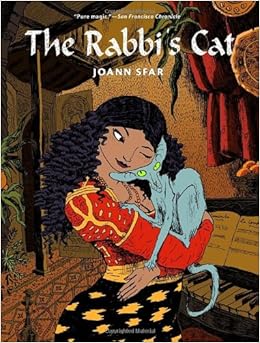
to name only a very few.
In webcomics, the exploration has exploded in thousands of directions penned by thousands of artists.
But there are good ways and bad ways to go about it, and some approaches, made by well meaning people, actually encourage and perpetuate stereotypes in subtle ways.
So how do we fight the dragon as readers and creators?
Here's some tips.
*Person First, Concept Second
It's not a hard rule: never, ever, EVER create a character who's just there to look interesting. Never create a character only there to prove a point. And NEVER create a flat character.
Too often, characters are added conceptually, in a burst of aesthetic interest. 'oh, I want to draw an aztec princess. Aztec princesses look cool'.
Okay, an idea can START that way. 'I'd love to draw an aztec princess' is a fine first thought. But the following thought should be 'I wonder where I can get the research I need' rather than 'I wonder what she'd wear...' Too many characters have been created simply to look exotic, and that leads to terrible cases of cultural appropriation and cultural disrespect. Disney is one of the most widely known culprits in this area, but it happens all over the place. You want to work with a culture? Fine. Get to know it on a deeper level. Get beyond 'looks cool'.
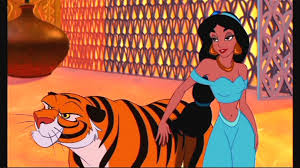 |
| WRONG WAY: Aladdin |
 |
| Right Way: Habibi |
And go beyond race too. NOBODY should have an identity based solely on their ethnicity. It can be important, crucial even, to their personality, but make sure they HAVE a personality. Make them people with lives, interests, creative ideas, loves and hates. NOBODY should be simplified down to a stand in for their race, a plot point, or a bit of atmosphere.
And never, ever, EVER,EVEEEERRRRRRR create a character 'because my story needs some diversity.' It's a noble idea, but characters created for this reason often end up flat and painfully empty of any real meaning, which can come off as an insult to the very people they were supposed to represent and respect. That, to me, is the absolute WORST result you can end up with: a cultural farce protected by the thin veneer of 'diversity'.
My main point here: write a person with a history, not a cultural idea attached to a face.
* R-E-A-S-E-A-R-C-H!!!!!!!!!!!!
Write What You Know is a golden rule. But too many people take that to mean 'write less.' NOOOOOO! LEARN TO KNOW MORE!
Do fantastic research. And not just Google. Go to the library. Don't just read the history and sociology stuff; that's often written by academics and outsiders. (but do read the boring sociology stuff, it can be surprisingly useful) Read the novels of the group you're interested in on your spare time. Interested in the Navajo culture? Read Tony Hillerman. Interested in Mexican culture? Read 'The Sea Remembers'.
Here's a personal example: I co-write and illustrate the webcomic Parmeshen, an alternate-earth fantasy based around two main characters.

One of the characters comes from a culture I based loosely on the Romani people. Yes, the idea did begin as 'cool! Gypsies!'. Most ideas are pretty weak in their infancy, like any baby. But then I did my research, starting with googling Romani musicians, artists and writers. I read every history I could find, read Romani poetry and stories, and got ahold of Romani music to listen to while I'm drawing. I tracked down discussions of Romani life written by the people themselves. I joined a Roma Rights facebook group and if I'm ever unsure I go there and respectfully ask questions.
It's hard work, but it's worth it. And I ended up with a culture which, while it definitely isn't Romani, also isn't a badly thought out and thinly veiled stereotype. Even if your world is fantasy, do your research.
*Know Your Character's Relationship To Race
Once you know all the details, decide: how does your character feel about them? No group is homogenous on a topic as fraught as race. Not all blacks are indignant, not all Indians are proud. Know how your character's ethnicity has affected their character, their outlook, and their actions. Because whether you know it or not, how you look does effect you, through other people. If people have looked at your character with scorn all their lives, how has that made them feel? Some people get angry, but some just get self conscious, scared even. Or maybe they were raised in a part of the world where race isn't an issue, and they're being faced with discrimination for the first time. How much of a shock would that be? How would your character react to this sudden injustice?
Get beyond the 'my people' point of view, and find out how your character really feels.
*Know YOUR Relationship To Race
Now here's the real toughie. How are you really feeling as you read this? How are you really reacting to writing a culture? Are you bringing your own baggage to the table? Well, of course you are. The dragon in your head is down there, whispering 'they're not like you, that means they're a threat.' But if we consciously know that, we can face it. Be aware of your own story as you tell others'.
I try to be very aware of this. I'm half Irish and half Menominee tribe, and was raised on the

Menominee reservation to the age of 11. Throughout my childhood, my Irish skin was a distinct badge of shame. Nobody tried to be cruel (okay, some kids, but kids are universally evil) but conversations and comments were regularly passed about 'the whites' and I very quickly got a personal narrative of being somehow 'watered down', a defective version, tainted by white blood. To this day I feel anxious talking about race, afraid deep down that I'll be called an imposter, a mongrel. I also got a cultural narrative of oppression. So when I write, I have to consciously THINK 'don't write another noble person oppressed by the cruel world story. And don't write another freak cast out by the cruel world story either. This is a person, they aren't all good or all bad.' I watch out for my own personal assumptions creeping into the story. Not all cops are bad, I remind myself. You don't need to walk around with a chip on your shoulder just because you have history, I tell myself. I examine myself as I tell a story, to make sure I'm telling THE story, not MY story.
Be ruthless with yourself. Examine your assumptions, your cultural views. Where did you get them? Are they still valid? If you find an answer you don't like, fix it.
If we write like this, we can fight the dragon rather than feeding it. Maybe one day, we can help people see all of humanity as 'one of our kind'. That's worth striving for.


 Racisim against the Irish perfectly underlines the insanity that racism truly is: two people who look exactly the same to modern eyes were, in 1849 Brooklyn or anywhere in America, judged by very different standards. One was a true American, upstanding and worthy. The other was a dirty Irishman, and would never amount to anything.


