Showing posts with label romance. Show all posts

Sunday, November 8, 2020

Monthly Matinee November: Fiction Relationship Analysis: Disney's Cinderella


Fiction Relationship Analysis: Disney's Cinderella

by: Melissa Koons
www.melsmagnificentmusings.com


All images are copyright to Disney and their property

"Cinderella" is a classic fairy tale. Nearly every culture across time and the globe has a version of the story as modified for their own culture. The original story emerged in China, 850 B.C.E. This explains why feet are so prominent, as foot-binding was a common practice amongst women during this time in Chinese culture. The smaller a woman's feet were, the more attractive she was. Part of this is because a woman with small feet were often wealthier; the act of foot-binding was so painful and destructive that they were unable to do many physical activities which showed their elevated status and ability to afford servants who would do the work for them.
While feet are a key aspect of the "Cinderella" fairy tale, there are more vital commonalities that transcend culture and are prevalent in EVERY version and retelling regardless of culture or era. The most prevalent commonalities are the notions that kindness and valor will prevail over deceit and hardships and that those who possess and express these qualities will be rewarded.
The Disney retelling of "Cinderella" is no exception. Cinderella is a kind, young woman who endures the mistreatment and downright abuse of her stepmother and stepsisters with unwavering patience and hope. This is where many misinterpretations are applied. While it is important to apply a modern and progressive lens to art and its representation of society, it's also important to compare it to the initial value and message that is being taught. There are better ways to make a point, of course, but there is a reason "Cinderella" is a story that has traveled so far and across time and culture.


Misinterpretation 1: "Cinderella" is promoting taking a passive approach to abuse

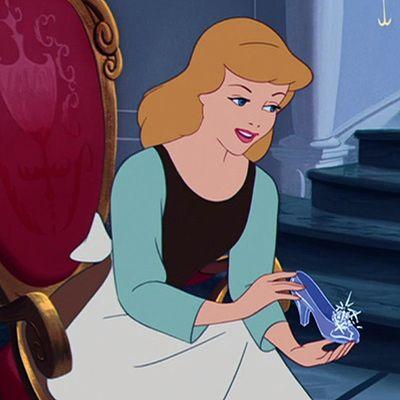
While this claim can be made, when you look at the story I argue that this is a misinterpretation and only a surface judgment. Specifically focusing on Disney's animated film (disregarding "Ever After" and the live-action for the purposes of conciseness,) Cinderella wasn't passive at all. She did her chores and tried to have a positive outlook on a bleak situation, but did never acknowledged that her treatment was "okay" or "normal."
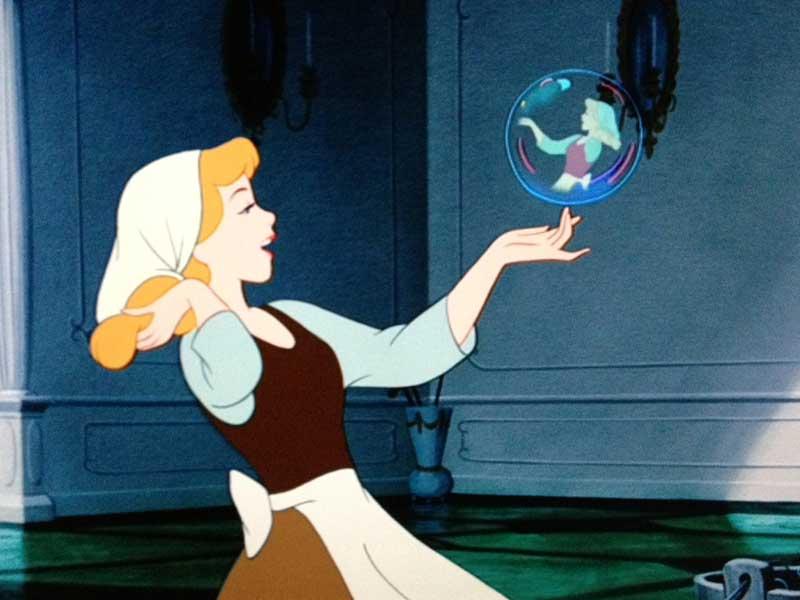
She noticed that her stepsisters were favored and that she was treated poorly, she never defended how they treated her. She never made excuses for them and their behavior. She knew it was wrong, but she was a kinder, stronger person and chose not to retaliate with the same mistreatment and negativity. It would solve nothing and she knew it was wrong to do so. So, she did what she had to do given her situation: endure. She was not in a position where she could reasonably escape her abusers, but that should not be confused with being passive. Bear in mind, it was made very clear that she had no other family and no other prospects. A young woman on her own in the time era that this story is told had few opportunities to support and provide for herself. Fleeing her step-family and being on her own would not have been an upgrade to her situation. It actually would have been a lot worse so she made do with the lesser of bad options.

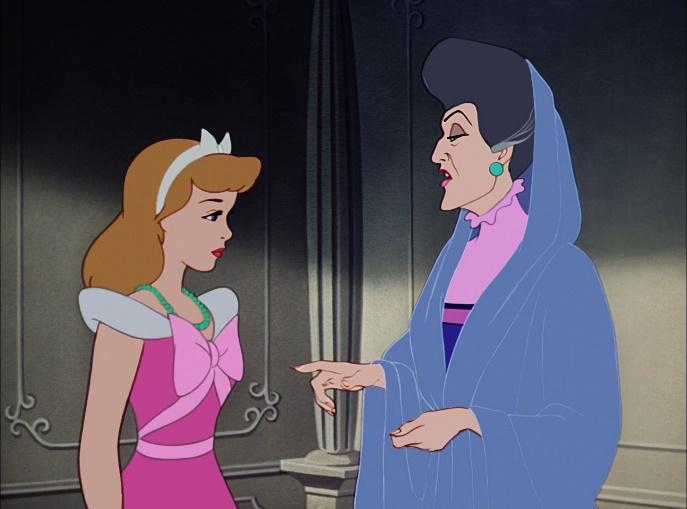
While she endured, she also defended herself and spoke up when it was important. When her stepsisters accused her of a prank by putting Gus in one of their tea cups, she tried to defend herself to her stepmother but wouldn't be heard. She attempted multiple explanations, only to be cut off each time. She didn't admit to something she didn't do, but she also didn't continue to fight a futile battle.

When it came time for the ball, she requested to go. It was important to her and she made it happen, circumventing the obstacles her family put in place to deny her the opportunity. Her hope and work ethic got her through it. She didn't resort to petty arguments that would get her nothing, instead she relied on her skills, integrity, and friends to accomplish what seemed impossible. If she were passive, she never would have requested to go let alone rose to the impossible challenge her stepmother issued her so that she could prove her worth and dignity. When her sisters destroyed her gown, she wasn't passive and didn't just stand there and let it happen. She tried to get away but they blocked her on both sides and she couldn't. She also was visibly upset with her stepmother, understanding it was she who manipulated her stepsisters to attack. Cinderella, again, didn't excuse the behavior nor was she "okay" with it. She fled to her safe place and wept.https://static.wixstatic.com/media/8ecf01_e9b49684bcac4196bd4996255c7ec097~mv2.gif/v1/fit/w_300,h_300,al_c,q_5/file.gif
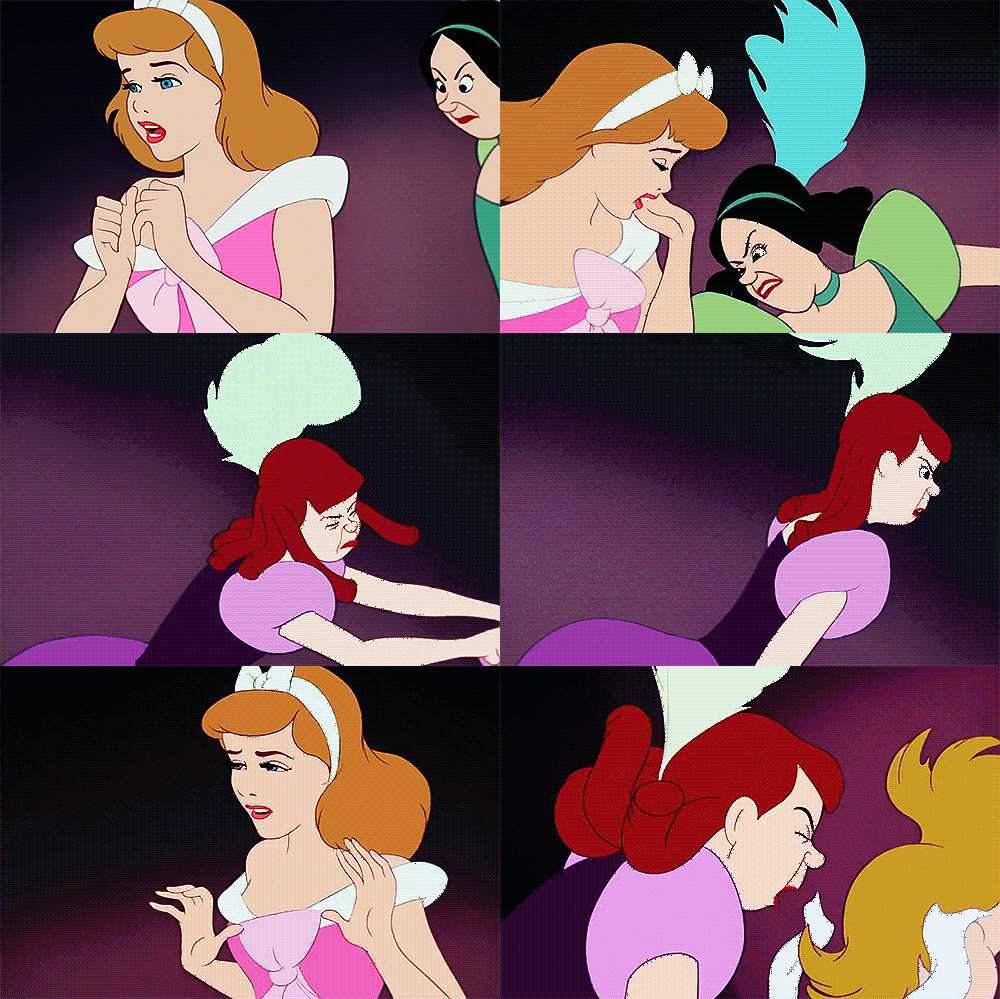
When her stepmother locked her in her room, she tried to get out. She banged on the door, she begged, she tried to pry it open. She didn't just sit there and allow herself to be locked away. When the duke and prince arrived with the shoe, Cinderella worked with the mice to get herself out of that room. Did she just allow her stepmother to make excuses and tell the duke there was no one else in the house? No! She ran down those stairs and made a point of letting them know she was there, she existed, and darn it she was getting out. Here was her opportunity, at long last, to escape her abuse and she took it! Even when her stepmother broke the glass slipper, she pulled out the second one. Boom! She wasn't about to let a little broken glass get in the way of getting out of that house. Nope. She was defiant of her stepmother when it mattered most and would result in her escape from her step-family's abusive household.
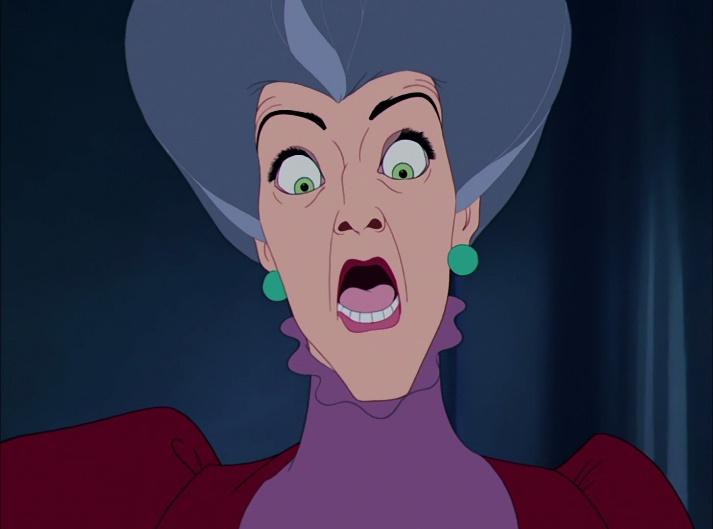
Boom, bitch.
Cinderella constantly fought her situation, but she picked her battles wisely and didn't fight with aggression or anger. Her kindness, patience, and good-natured behavior may appear like a passive approach to her abuse, but it is far from it. Instead, her actions and reactions only support that she is kind and honorable with integrity and a strong moral and ethical code which are all the traits that every version of the story told anywhere highlights.

Misinterpretation 2: "Cinderella" promotes the damsel in distress stereotype (and that you can meet a man, dance with him, barely talk, and then marry the guy.)
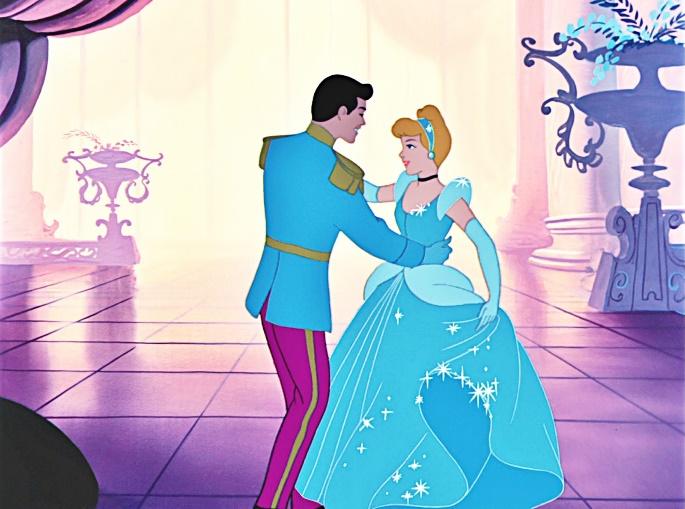
Yes, many fairy tales promote the idea that you don't need to get to know someone before marrying them but this notion is also a very modern concept. For most of history, marriages were arranged based on building connections and aligning with families who would give you the most benefits in supplies, wealth, and fortitude. "Getting to know" your spouse didn't become a thing until really the 20th century.
That aside, the modern perception of romantic love gets in the way of the actual message. The prince didn't "save" Cinderella—technically, the mice and birds did—he was her reward. It wasn't that she was the damsel in distress, I didn't see the prince run upstairs and free her from her locked room, did you? No. She got herself out of the situation by making friends and connections whom she could rely on. On top of that, she saved herself by providing the other slipper and proving she was the woman he was seeking. In your face step-family! (Again, another example of her not being passive.)
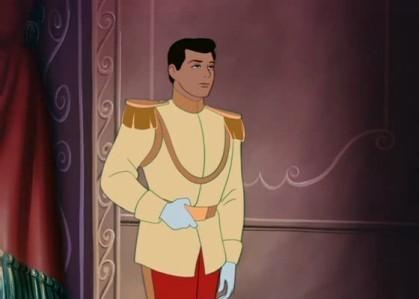
Just stand there and look pretty, Princey
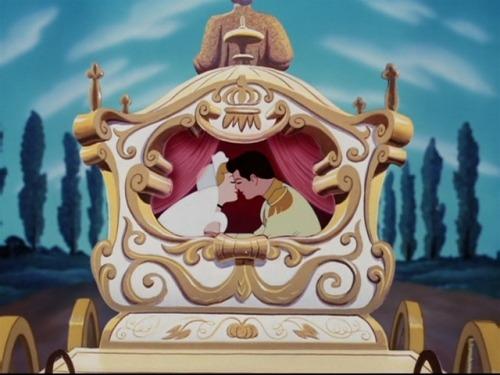
The whole moral of the story is that kindness and valor will be rewarded. Marrying a prince, moving into a castle where she will want for nothing, and never have to endure the abuse or hardships of strenuous labor again are her rewards for sticking it out and overcoming her situation without compromising those qualities. Really, the prince is an object. That's part of the reason why he doesn't have a name. It doesn’t matter; he as a person is inconsequential, what he represents is what is more important to the story and he represents positive affection and security.

Misinterpretation 3: Outer beauty is what matters

Obviously, Disney has done a lot over the recent decades to try and create female characters who are more than their appearance and whose physical beauty is rarely even acknowledged let alone a factor in their story (Mulan, Moana, Brave, etc.) However, Cinderella was created in the 1950's and the feminist movements of the 70's, 90's, and 2010's hadn't happened yet. Due to the culture and time period it was created in, yes, there is a bit more focus on her beauty and poise being what attracts the prince. This was later rectified in films with longer run times such as "Ever After" and Disney's live-action version.
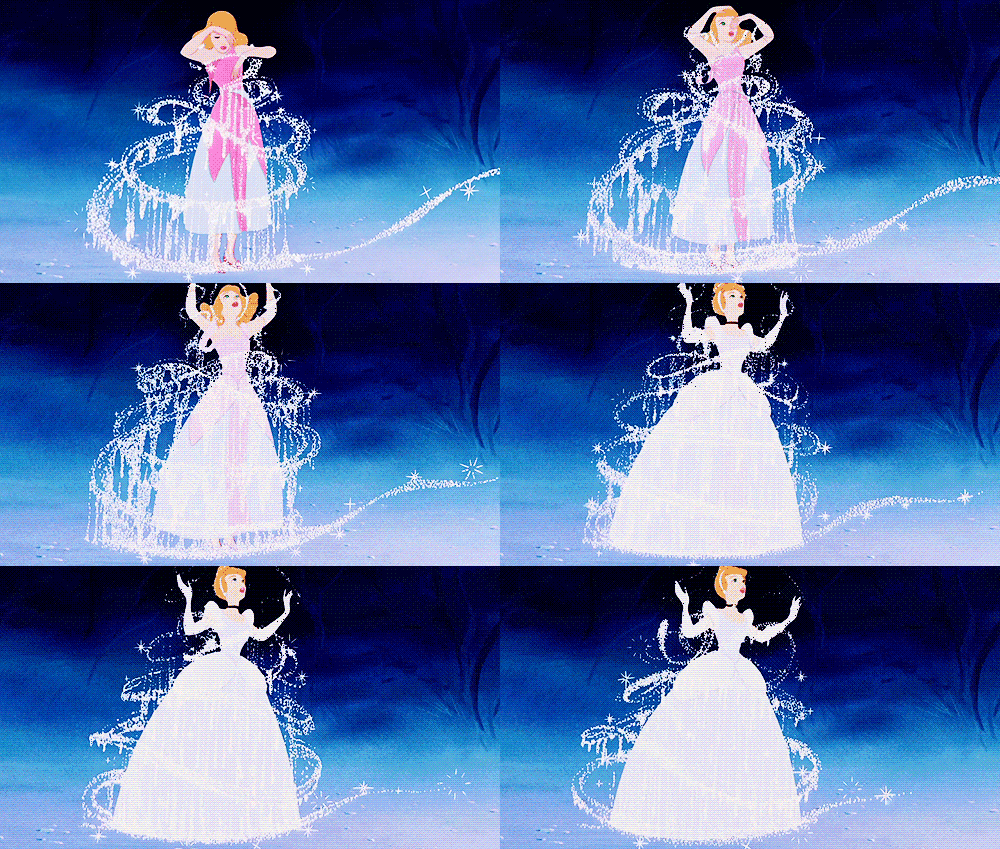
That said, even in the animated film that was never really the point. In the original fairy tale it was a consistent theme that she was beautiful and her evil stepsisters would make her sleep in the fireplace, getting covered with cinder ash, to minimize her beauty. Once she was freed of their grasp, and with her fairy godmother's help, her true beauty could shine through and she no longer had to hide who she was because of her abusers. Looking at it through this context, her outer beauty is a mere reflection of her inner beauty and it is that which attracts the prince because—remember?—he's her reward for being a kind, good-natured person.
https://static.wixstatic.com/media/8ecf01_646e0a75e395483c810a35d29820a6d8~mv2.gif/v1/fit/w_300,h_300,al_c,q_5/file.gif
Everyone knows a little glitter fixes years of abuse and neglect

When working with a visual, animated format in the 1950's it was difficult to translate "he's attracted to her inner beauty because she's such a wonderful person" with a glance and a 74 minute run-time. As mentioned earlier, Disney figured out how to fix that issue with the live-action version where they allowed the prince and Cinderella to have a few on-screen conversations to get to know each other. It's important to mention that the culture of the 1950's was much less "in your face" about these interactions and messages as our culture is today. In the 50's, courtship and romance was meant to be discrete and portrayed as a subtle smile, a dance, a lingering gaze—not as we expect to see it now through witty banter, conversation, and some passionate shouting. But, considering the prince is simply an object of her reward, it doesn't really matter if he gets to know her in the animated version since that was never the point of his character or presence.
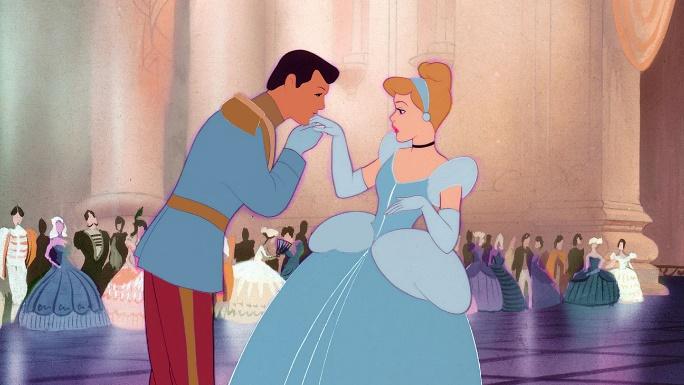
Damn girl, your inner beauty
 and kind demeanor is so attractive
that no one else at the ball can compare
to your kind soul


A lot of Disney's earlier animated princess movies get heavy criticism now that our culture has changed our expectations and demands for female characters and representation (which is super awesome and I love the new direction Disney is going with their princess films and how they are adding more substance to their earlier ones in the live-action remakes to address some of the earlier issues with characterization and plot) but not all of it is deserving. When you consider the source material and the lesson that was meant to be gained from the fairy tale, Disney actually stuck to it pretty well. The issue is when the audience loses sight of the actual message and lesson and begins to only identify the differences between their expectations now vs what was acceptable in the 1950's.
The point of Cinderella is to be a kind person and to not allow external hardships compromise your inner integrity. When the viewer remembers this, Cinderella is actually an excellent role model for everyone. She knows she is being mistreated but she endures it the best she can while she has to, not allowing it to make her angry or bitter or hurtful toward others, and the moment she gets her chance to better her life and situation she takes it. She fights within her means and is eventually rewarded for her good nature, kindness, and endurance.
 https://static.wixstatic.com/media/39c2d7_2b9aa62dbaac4063997d8ad7b421e4d5~mv2.png/v1/fit/w_300,h_300,al_c,q_5/file.png
If Cinderella were to get a modern update, how do you think her rewards would differ based on modern society's values? Maybe a dashing prince and a palace where she would never have to work again aren't the rewards we seek any more, but the message of the tale still stands and has intrinsic value: be kind, be strong, and don't compromise your integrity because of a negative situation.

Saturday, April 20, 2019

Saturday Review April 20: Tripping Over You, Revised And Updated

Today

Fall Head Over Heels 


For 

Love isn't easy. Neither is college. It's hard to go through, and it's staggeringly hard to portray well. But the comic 'Tripping Over You' pulls it off with an A+ and with charm.
I have to admit, I'm biased. This is one of my favorite romance tales of all time. So apologies if I gush.
The creation of Suzana Harcum and Owen White, Tripping Over You can be found here.
The story centers around two young men as they navigate the complex steps of this dance we know as love. Milo Dunstan is a gorgeous, outgoing, witty and warmly outrageous class clown; impulsive is his middle name. The only thing he's ever been slow to act on is his love for Liam Shwartz, the quietly sardonic law student he's loved for years. And when he finally admits it, it involves alcohol, misunderstandings, and a black eye.
oooooops.....and it gets better from there.

The Rating

One of the best romance stories on the web. A must read.

The Raves

I still haven't pinned down how they do it, but this is the only 'school romance' tale I've ever read that works. And by works, I mean you're grinning as you read and archive bingeing so heavily that time loses all meaning.
I think one of the things that makes 'Tripping Over You' work so well is the tight, well-scripted writing style. A lot of the extraneous 'talking about our feelings' stuff that shows up in other school romances  is cut out here. There's no self-absorbed angstiness, though there's plenty of emotional conflict. There's no contrived struggle put in the way of the lovers to test them as you so often see in romance stories. Only their own perceptions, misunderstandings and emotions get in their way, but that's what makes this story all the more real, and all the more powerful.
 The social interactions are some of the most natural and funny I've ever read. 'Natural' is the keynote of the written dialogue as well; it reads so smoothly that you can hear it in your head. And every character is totally believable as a human being.

   Humor also plays a strong part in making this story strong.
The humor is wry, clever and 
at times verging on the sarcastic or the black,
but it's used to bring out the characters' 
humanity and breaks up scenes that could so easily
descend into painfully maudlin prose. In 'Tripping' 
humor leavens the emotional recipe and gives the reader
the breaks they need at exactly the right times. The dry wit of it also makes this one of the few romances that doesn't make you feel your IQ might be dropping as you read. It's nice to find a romance you don't start guiltily over when someone catches you reading it. Paired with wonderful writing and wit is lovely artwork that evolves along with the characters. There's a great sense of movement and pose in this piece, and a really wonderful use of lettering. And when the comic begins to use color, a whole new level of enjoyment comes in.
The great grasp of comic craft, reminiscent of  Craig Thomson in 


grasp and clarity and of Daniel Corsetto in style and skill, allows 'Tripping' to skillfully handle a wealth of really wrenching issues: self worth, social norms, sexisim, homophobia, family issues and expectations verses personal identity, to name a few. And because it's a tale told with intelligence, compassion and humor, the moments when it does deal with these subjects WORK. They come off in the creators' skillful hands as powerful rather than preachy. In fact, some of them are strong enough to leave you with tears shamelessly standing in your eyes and a lump in your throat. Under the humor, the sass and the fun, these characters are sincere: honest human beings going through real life events and overcoming real obstacles, some of the most challenging that a person can deal with. And as they deal with their problems, we, the readers, are helped to work through some of our own through them. Some of the scenes in this comic will move you, may even change you. And that's the highest praise I can give any piece of art.

The Razzes

I really made a blunder when I originally wrote this review. There are supplemental pages at the end of each chapter, detailing cute scenes which are supplemental but not integral to the plot. I'd assumed that TOY, like a few other comics, knocked these out quickly to keep a good buffer.
How wrong I was. These sweet little pages are actually the artwork of Owen. Knowing that I'm getting the stylistic work of two different artists in one chapter completely changed my outlook on the pieces!
This time it's the reviewer who's made the mistake, and not the comic. It all goes to show that really trying to get to know others and their lives is always worth the work.


The Revue

Among the best romances in the field. A definite must read.


Sunday, February 18, 2018

Sunday Revue February 18: Spidersilk

Draw Your Sword And Jump In With


 Spidersilk!


In this story, when they say 'thicker than thieves', they mean it. The motley crew of thieves who call themselves the Orbweavers spin their warp strings of adventure and intrigue across a weft of camaraderie and deep mutual respect. Oh, and a little romance goes into the decorative stitching too.
The creation of Alakotila, Spidersilk can be found at this link.


The Rating

A lovely little ramble through historic by-ways and crimes! 

The Raves

I'll give this comic two of my highest compliments: I had to force myself to stop reading in order to write the review, and I added this one to my personal reading list. Be aware, I do that rarely.
The story revolves around Prentice, a syphon (read blood mage) who builds his new life among a tribe of rascals and scallywags.

The story is delightful: by turns laugh-out-loud funny, tender and topped up with action, it's a rollicking ride. The romantic subplots are well and amusingly done, balancing tenderness with humor in a way that gives each relationship its own authenticity. 
The art style is a nice balance of skill and practicality: chapter pages and first pages are in well-done color, leaving the rest of the issue in sepia tone. I applaud the creator for striking a good balance between craft and speed: by doing work in this way they get to have their cake and eat it too. Oh, and speaking of cake, new thieves go through a training exercise of stealing cake from other thieves. The hilarity that ensues from that is enough reason to read. 
The creator is pulling on sword and sorcery fairly heavily for the world building basics, but they do so well enough that you question your own definitions of what each trope means as the characters do. Racial bias and the overcoming of it is one of the mainstays of the story, and it's well integrated, becoming neither a soapbox nor a narrative bludgeon but simply a nasty fact of our character's lives. And when there is action, it's both well planned and well drawn, both the amusing and the bloody bits.
All in all, I was quite a happy reader.

The Razzes

My biggest stumbling block to being a reader was the dialogue layout and general lettering. I can hear you wince from here, gentle readers. Yes, lettering, the bane of all comic creation.
But in the case of Spidersilk, there is hope for some fairly easy fixes!
Firstly, a little layout tweaking. Throughout the story, there are many pages where two small panels are offset by a larger vertical panel. 
This is fine, but if it's to be done, it must be done in a way that makes the eye flow easily. If the speech bubble on the right-hand panel bottom were the only one in that panel, this example would be perfect. But as the eye must return to the top, confusion ensues. Western minds are trained to read left-right, top-bottom. Change that and watch your readers wince. 

Working on the speech bubbles would also be a help. Many of them are a touch shaky and oddly formed, giving the reader a 'cramped' reading experience. I had this issue a great deal as a new artist myself.
But there is a fix for this!
I use GIMP as my main program, so I'll display it through that, but every art program I've heard of has a version of this process. 
First, create a transparent layer between the art and the type. For the purposes of this example and my laziness, I won't be re-typing the text to show. (by the way many apologies to the creator, I mixed up who's speaking in this panel and due to said laziness decided to leave my mistake in  rather than re-make the example. My sloth, my shame).
Using a very large setting on a white, round brush, create circles/ellipses around each text block.
By the way, try as much as possible to create complete circles. Speech bubbles that are cut off here and there harm the aesthetic of the page. A bubble that butts into the edge of the panel should be continued into the gutter. Make the gutter larger if need be, it's worth it.
Add your bubble tails with a smaller setting on the white brush. Then select your Wand tool. 

Select the entire transparent layer by clicking it with the wand tool. This will outline your bubbles in a dashed line.
Now, stroke the selection. (particularly approps for this story heh heh ;) )

Always stroke with the paintbrush or pencil tool set to the line thickness you want. This outlines all your bubbles in a nice black line. 

If you forget to use the paintbrush or pencil and simply stroke with the automated line size, the lines will be pixilated, as below.
If you did that by accident, never fear. Just hit 'blur', then 'cartoon' or 'photocopy', which will smooth out the lines.
And there you have it:quick, good looking bubbles! 

The Revue

A lovely wander through a well built world, with a few laughs along the way.

Sunday, March 19, 2017

Daniel: A Grave Tale of Horror

Ladies and Gentlemen!
Today, I present you a grave tale of horror!
The story of Daniel!

Are you gonna mop that up, Daniel?


Daniel, created by Sara Nelson, is set in 1934 and is a story about the titular character, Daniel, his crush, Christine, her family, and potential rival,Wayne. Daniel is mild-mannered, introverted, and awkward, but after an encounter with Wayne, events take a bad turn for Danny-boy, who finds himself among the undead. Turned into a vampire. How? You'll have to read to find out. Over the course of the nine chapters (it's not completed yet) we're presented with an intimate look at Daniel and Christine's encounters after his transformation and slowly unravel the mystery behind him.

Rating


Raves


Story

I tend to like intimate stories like this one. It's focused almost entirely between Daniel and Chrissy. Epic adventures are fun, but I get lost with the sea of characters and their motivations. This story begins with a cute romantic moment and a lot of awkwardness and stuttering by Daniel, which I found that mildly annoying after a while, but as the story unfolds, Daniel becomes unhinged in latter chapters as he seeks vengeance against Wayne and lusts after Chrissy's blood.

I thought Sarah handled Daniel's transformation from shy and introverted to unhinged pretty well. The chapters are long and the pacing a bit slow, but it's enough time to really settle in and have nuanced moments with Daniel. It's those moments that give us the gradual progression into the darker chapters later in the story, and they do get pretty dark so if you're squeamish when it comes to blood and gore you may want to skip it.

Art

I dig the black and white look of Daniel. It's set in 1934 and the black and white gives it that old-timey charm.

The characters are really well drawn. They show a good sense of proportion. The clothing is detailed and looks from the era. Everything is cleanly inked and softly shaded. The character expressions are exaggerated but help sell a lot of the emotion. I like the eyes in particular where we can see a lot of the fear and craziness come through in later chapters.

Razzes

Art 

One of my qualms about the art in Daniel is the backgrounds in the panels. Yes, they're rendered nicely in black and white but they appear sterile.


Where are all of the people in these backgrounds? Even one or two would help sell the illusion of human presence otherwise it looks like a ghost town. Now, maybe that adds to the horror of it, but my initial reaction was the stage felt devoid of life. I don't know if these are 3D models, but they give me the feeling they are mostly barebone 3D models traced-over and textured. It's not a bad job by any means. The texturing fits the perspective and and line work is really good, but the building facades look flat and too perfect. Some bumps on the building silhouette could help show the unevenness of the brick, plaster, or concrete. The windows and doors could be deeper inset to show thickness as well.


I also notice some issues with building proportions and perspective issues. Whereas the character proportions look decent, the windows, door frames, and various aspects of the buildings don't seem to be proportioned well. The windows of the house (above) and in the previous perspective example appear too wide.

Anime artist Thomas Romain has some great tips for drawing buildings in perspective, which you can read here on Kotaku (or find on his twitter account).

The first example talks about building proportions. There are more tips in the article on Kotaku.


Here's a tutorial on constructing a building using a flat image manipulated into the perspective using Photoshop's transformation tool.


Word Bubbles

Another small nitpick I had was with the word bubbles. The words are arranged in a square and then circled with a word balloon, but it leaves uneven spaces around the dialogue and the bubble. The letters come close to the edge of the bubble in this case. The word bubble carrots appear too thick and in a few instances I saw them implicitly criss-crossing over one another. It's not a big deal. I was able to figure out which character was speaking, but these are minor things that could be fixed in future pages to make a great presentation even better.

Revue


Daniel's a story that unveils its mystery and insanity over time. It's well drawn and an enjoyable, intimate, and at times a deeply unsettling and an uncomfortable horror story.